
Expertise use-case

WhatsApp OTP in Morocco: All Use Cases for Businesses (2026)

Complete guide to WhatsApp OTP use cases in Morocco: COD e-commerce, banking, health, education, loyalty, real estate. Costs, integration and compliance for each sector.

WhatsApp OTP in Morocco: All Use Cases for Businesses (2026)
Table of Contents
  1. Why WhatsApp OTP is essential in Morocco in 2026
  2. E-commerce and COD: order confirmation and address verification
  3. Banking and fintech: strong 2FA authentication
  4. Health: appointment confirmation and teleconsultation
  5. Education: e-learning platforms and universities
  6. Real estate, automobile and large tickets: signing of documents
  7. Loyalty and retail program: access to personalized benefits
  8. How any Moroccan business or app can start in less than an hour

Why WhatsApp OTP is essential in Morocco in 2026

Morocco is one of the countries in the world where WhatsApp is the most dominant: 93% of smartphone users use it daily, compared to 68% in France and 54% in the United States. This reality creates a unique opportunity for Moroccan companies. An OTP (One-Time Password) sent by WhatsApp arrives in the application that your customers already consult constantly, with an opening rate of 98% almost instantly. Compared to SMS (72% open rate, 5-15 seconds delay), WhatsApp offers a superior user experience for all critical checks. The cost is also an advantage: 0.65 MAD per WhatsApp OTP compared to 0.792 MAD per SMS with the default sender, a difference that adds up on every verification.

E-commerce and COD: order confirmation and address verification

Cash on Delivery (COD) represents 70 to 85% of e-commerce transactions in Morocco. The major problem: false returns. A customer places an order, no longer responds, the delivery person makes an unnecessary round trip. The solution: Two-step WhatsApp OTP. Step 1 — Order Confirmation: Immediately after ordering, send a WhatsApp OTP with the message "To confirm your order #12345 amounting to 349 MAD, tap Copy Code". The client copies and pastes the code. If the code is not validated within 15 minutes, the order is marked "unconfirmed" and the stock is released. Step 2 — Address Verification: 24 hours before delivery, send a new WhatsApp message to confirm availability. Ecommerce businesses using this approach report a 35-45% reduction in COD returns. Each avoided return saves on average 50 to 120 MAD in logistics costs. The investment in WhatsApp OTPs pays off from the 3rd return avoided.

Banking and fintech: strong 2FA authentication

Moroccan banks and fintechs (CIH Bank, Attijariwafa, Orange Money, Barid Cash) are subject to Bank Al-Maghrib (BAM) which requires strong two-factor authentication for sensitive transactions. WhatsApp OTP meets this requirement with additional benefits. Regulated use cases: connection from a new device or new IP, transfer greater than 1,000 MAD, modification of contact information, account unblocking after 3 failed attempts. Why WhatsApp is superior to SMS for banking: a banking OTP must arrive quickly. When making a transfer, the user waits, and a code that lags creates anxiety, and WhatsApp lands in an app the user already has open. Additionally, the WhatsApp app is end-to-end encrypted — an extra layer of security that SMS doesn't offer. Regulatory attention: BAM requires full traceability of each OTP. Retain the message ID, timestamp, delivery status, and request IP. The EnvoiSMS.ma API automatically records this metadata with each sending.

Health: appointment confirmation and teleconsultation

The Moroccan health sector loses between 15 and 30% of its appointments due to no-shows. One in four patients do not cancel and do not show up. WhatsApp OTP turns appointment confirmation into active engagement. Optimal flow: 48 hours before the appointment, send a WhatsApp “Your appointment with Dr. Benali is on 07/15 at 2:30 p.m. To confirm: [Copy the code] or cancel, reply CANCEL”. The patient presses the button — an active gesture that creates psychological engagement. Clinics and practices using this method report a 40 to 60% reduction in no-shows. For teleconsultation, the WhatsApp OTP serves as authentication before accessing the virtual room — a simple alternative to complex login systems that elderly patients find difficult to use. Compliance: health data is subject to Law 09-08 and the directives of the Ministry of Health. Never mention the diagnosis or medical information in the OTP message — only the appointment time and doctor.

Education: e-learning platforms and universities

Moroccan online teaching platforms (universities, vocational training schools, MOOCs) face a growing challenge: shared accounts. A student buys a subscription and shares it with 5 friends. WhatsApp OTP solves this problem with session-based authentication. For each important connection (exam, access to a premium course, download of certificate), a WhatsApp OTP is required. Unlike students who ignore their emails, WhatsApp guarantees 98% immediate opening. Moroccan universities also use WhatsApp OTP for: identity verification during online registrations (reduction of documentary fraud), access to exam results (the code acts as the student's digital signature), registrations for national exams (BAC, license). For Moroccans living abroad (MRE) wishing to enroll in Moroccan universities, WhatsApp is often more reliable than international SMS — foreign numbers receive WhatsApp messages perfectly without roaming charges.

Real estate, automobile and large tickets: signing of documents

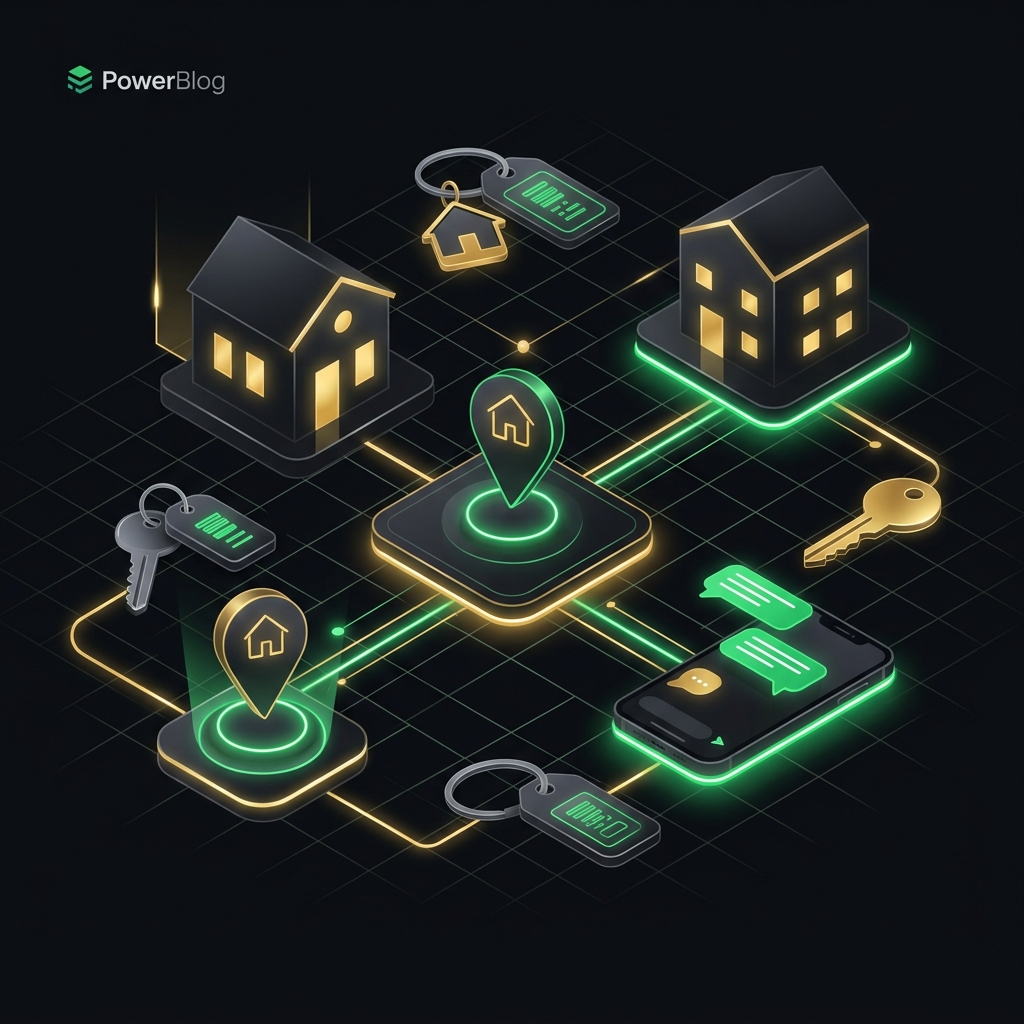
For high-stakes transactions — real estate purchase, car leasing, insurance subscription — identity verification by OTP provides legal and contractual security. In Morocco, where electronic signature is governed by Law No. 53-05, the OTP constitutes admissible proof of digital consent. Concrete use cases: real estate agencies — WhatsApp OTP to confirm a purchase offer or a premium visit request. Car dealers – verification code before submitting an LOA/LLD financing request. Insurance companies — strong authentication when purchasing a policy or making a claim online. Notaries and lawyers — identity verification before sending confidential documents. The WhatsApp advantage in this context is the preservation of the message in the conversation history — the user has proof of receipt of the code, which reinforces the probative value in the event of a dispute.

Loyalty and retail program: access to personalized benefits

Major Moroccan brands (Marjane, Label Vie, Acima, Carrefour Market) and international franchises use loyalty programs to retain their customers. WhatsApp OTP improves these programs in two ways. Passwordless authentication: instead of a login/password that the customer forgets, access to their loyalty area is via OTP WhatsApp. The customer enters their phone number, receives a code in 2 seconds, and accesses their points. Zero friction, zero forgotten passwords. Activation of personalized offers: when an exclusive offer is available for a VIP customer, an OTP is used to “unlock” the discount in store. "Your 15% discount expires tonight. Present this code: 847291." The cashier validates the code in real time via a terminal connected to the EnvoiSMS API. This mechanism prevents fraudulent sharing of coupons and makes it possible to precisely trace which customers have used which offer.

How any Moroccan business or app can start in less than an hour

WhatsApp OTP is no longer reserved for large banks or e-commerce giants. In 2026, any Moroccan company or application — VSE, startup, agency, medical office, school, SaaS platform — can integrate WhatsApp OTP verification in less than an hour via the EnvoiSMS.ma API. Step 1 (5 min): create a free account on EnvoiSMS.ma. Get your API key immediately. Step 2 (20 min): Integrate two API calls into your code — a POST to send the code, a POST to verify it. Complete examples are available in PHP, Node.js, Python and Laravel in the documentation. Step 3 (5 min): test in sandbox mode with your own number. SMS fallback is automatically activated if WhatsApp fails. Step 4 (30 min): Go to production. Each WhatsApp OTP costs 0.65 MAD. There are no setup fees, no mandatory monthly subscription, no contracts. You only pay for what you send. The cascade system ensures that each user receives their code — WhatsApp if available, SMS otherwise. The result: a professional, fast and cost-effective verification experience for all your Moroccan users, today.

Why choose EnvoiSMS for your business?

Carrier Delivery

Local routes to IAM, Orange and Inwi, with automatic failover between routes and delivery status sent by webhook.

Cost Optimization

WhatsApp Business API from 0.65 MAD per message with optimal ROI.

Sovereign Data (CNDP)

Full compliance with Moroccan personal data protection regulations (CNDP).

Is WhatsApp OTP legally equivalent to SMS OTP in Morocco?
In terms of proof of consent, yes. Moroccan law no. 53-05 on electronic exchange recognizes any authentication mechanism that uniquely identifies the user. A WhatsApp OTP received on the registered phone number constitutes valid proof of authentication, just like an SMS OTP. For financial transactions regulated by BAM, check the specific requirements of your sector.
What happens if a Moroccan customer doesn't have WhatsApp?
The EnvoiSMS.ma API automatically switches to SMS if WhatsApp is not available or if the message is not delivered within a few seconds. This waterfall system lets your customers receive their OTP, whether they have WhatsApp or not. In practice, less than 7% of Moroccans on smartphones do not have WhatsApp.
How to prevent fraudsters from using WhatsApp OTP to hack accounts?
Apply these rules: (1) Limit to 5 attempts per session before temporary blocking of 30 minutes. (2) Bind the code to the IP address and User-Agent of the request — reject if the IP changes between request and verification. (3) Short TTL: invalidate the code after 10 minutes. (4) Invalidate immediately upon success — a code can only be used once. (5) Alert the customer by email if an OTP is requested from a new IP.
What is the minimum volume for WhatsApp OTP to be profitable?
The price gap between a WhatsApp OTP (0.65 MAD) and an SMS (0.792 MAD with the default sender) applies from the first send. There is no minimum volume. Implementation only takes an hour of development — the ROI is immediate.

Suggested Articles

Real Estate SMS Marketing in Morocco: Automated Alerts & Lead Nurturing
use-case

Real Estate SMS Marketing in Morocco: Automated Alerts & Lead Nurturing

HR & Recruitment SMS in Morocco: Slashing Interview No-Shows
use-case

HR & Recruitment SMS in Morocco: Slashing Interview No-Shows

E-Commerce SMS Marketing in Morocco: Boosting Conversion & Retention
use-case

E-Commerce SMS Marketing in Morocco: Boosting Conversion & Retention